Choosing the Right Battery for Warehouses
From manufacturing facilities and retail distribution centres to food warehouses and e-commerce operations, businesses depend on reliable material handling equipment to keep products moving efficiently. As electric forklift adoption continues to grow, warehouse managers face an important question: should they stick with traditional lead-acid batteries or invest in lithium-ion technology?
The answer depends on your operating environment, fleet size, budget, and long-term business goals. While lead-acid batteries remain a dependable choice for many applications, lithium-ion batteries are transforming warehouse operations by reducing downtime and lowering maintenance costs. For comprehensive equipment comparisons, buying guides, and market insights, visit Canada's most complete forklift resource.
Lead-Acid or Lithium-Ion?
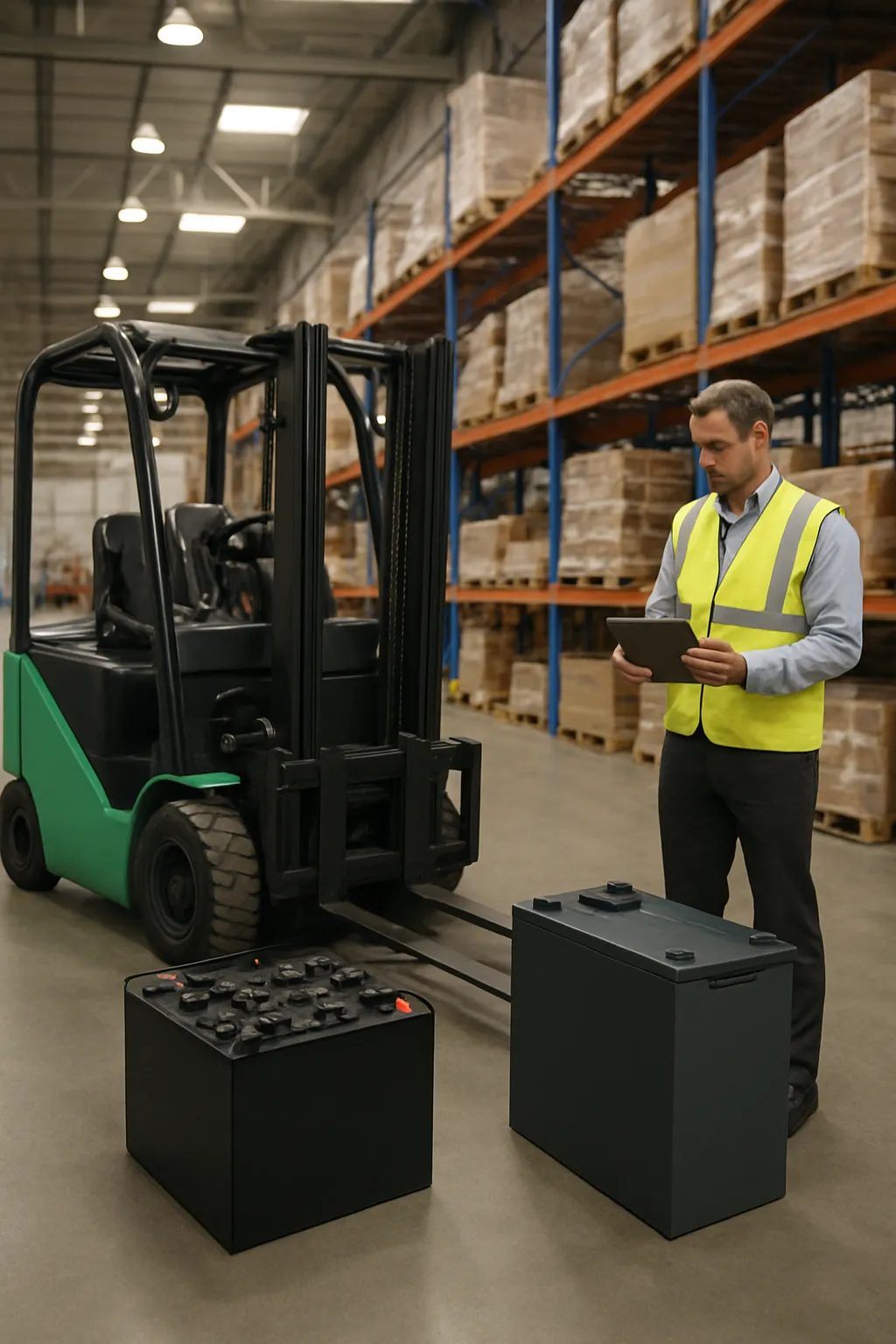
Lead-acid batteries remain a practical option for facilities that operate a single shift, have established charging infrastructure, and prioritize a lower upfront investment. Lithium-ion batteries are often better suited to multi-shift warehouses that need faster charging, reduced maintenance, and maximum equipment uptime.
Understanding the Two Battery Technologies
Both battery types power electric forklifts effectively, but they operate very differently.
Lead-Acid Batteries
Lead-acid batteries have powered warehouse equipment for decades and remain a common choice because they offer:
- Lower upfront purchase costs
- Proven technology
- Broad service availability
- Easy replacement options
However, these batteries require consistent maintenance and dedicated charging procedures to perform at their best.
Lithium-Ion Batteries
Lithium-ion technology has become increasingly popular across North America due to its efficiency and ease of use.
Key advantages include:
- Faster charging
- Opportunity charging
- Longer service life
- Minimal maintenance
- Consistent power delivery
- Improved energy efficiency
These features make lithium-ion batteries particularly attractive for busy warehouses operating multiple shifts.
Charging Time Comparison
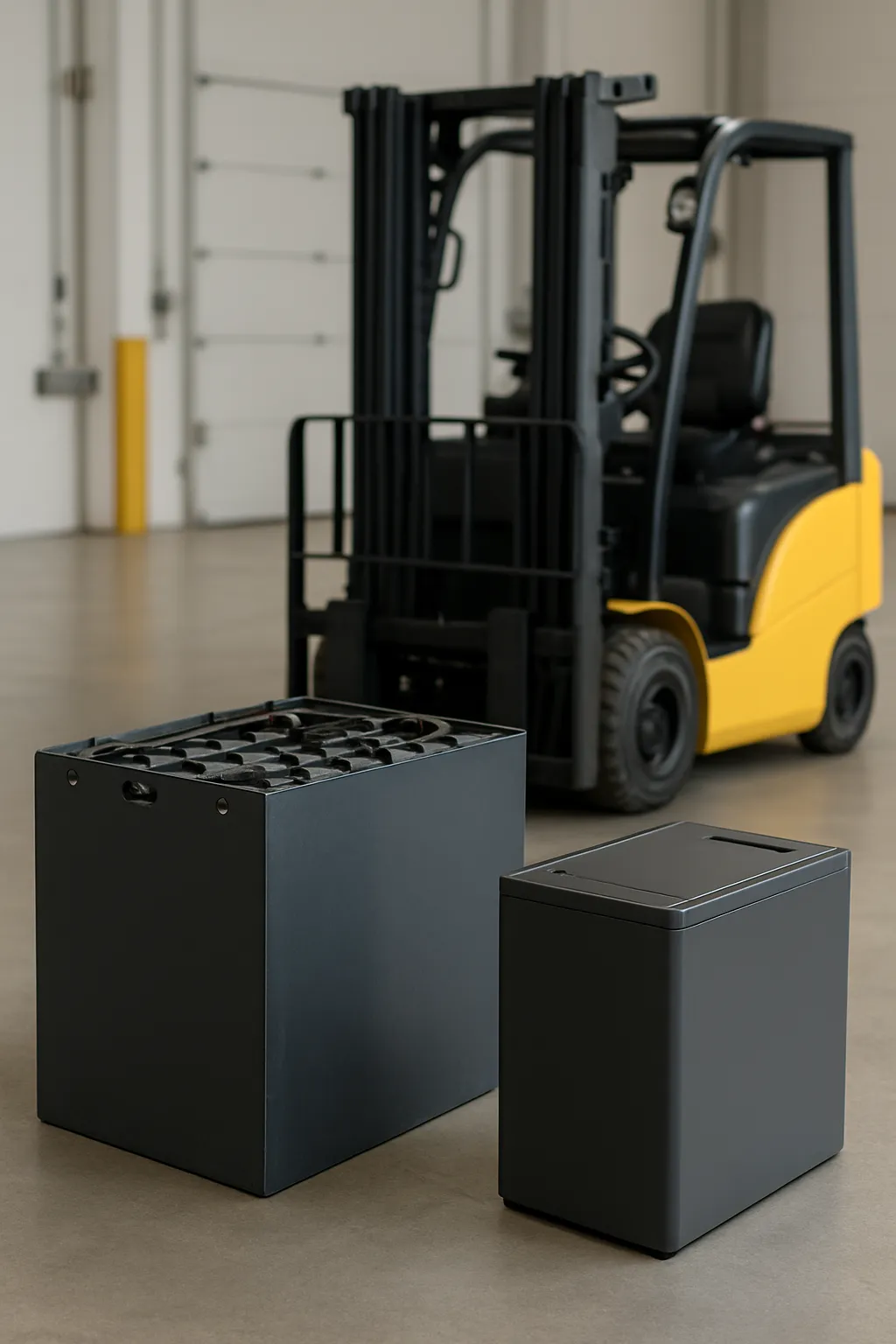
Charging efficiency has a direct impact on warehouse productivity.
Lead-Acid Batteries
Most lead-acid systems require:
- Approximately 8 hours to recharge
- An additional cooling period
- Dedicated charging rooms
- Spare batteries for continuous operations
For facilities running around the clock, battery changeovers become part of the daily workflow.
Lithium-Ion Batteries
Lithium-ion batteries significantly simplify charging operations.
Benefits include:
- Rapid charging
- Opportunity charging during employee breaks
- No cooling period
- No battery swapping in many applications
Because operators can recharge throughout the day, forklifts spend more time working and less time sitting idle.
Maintenance Requirements
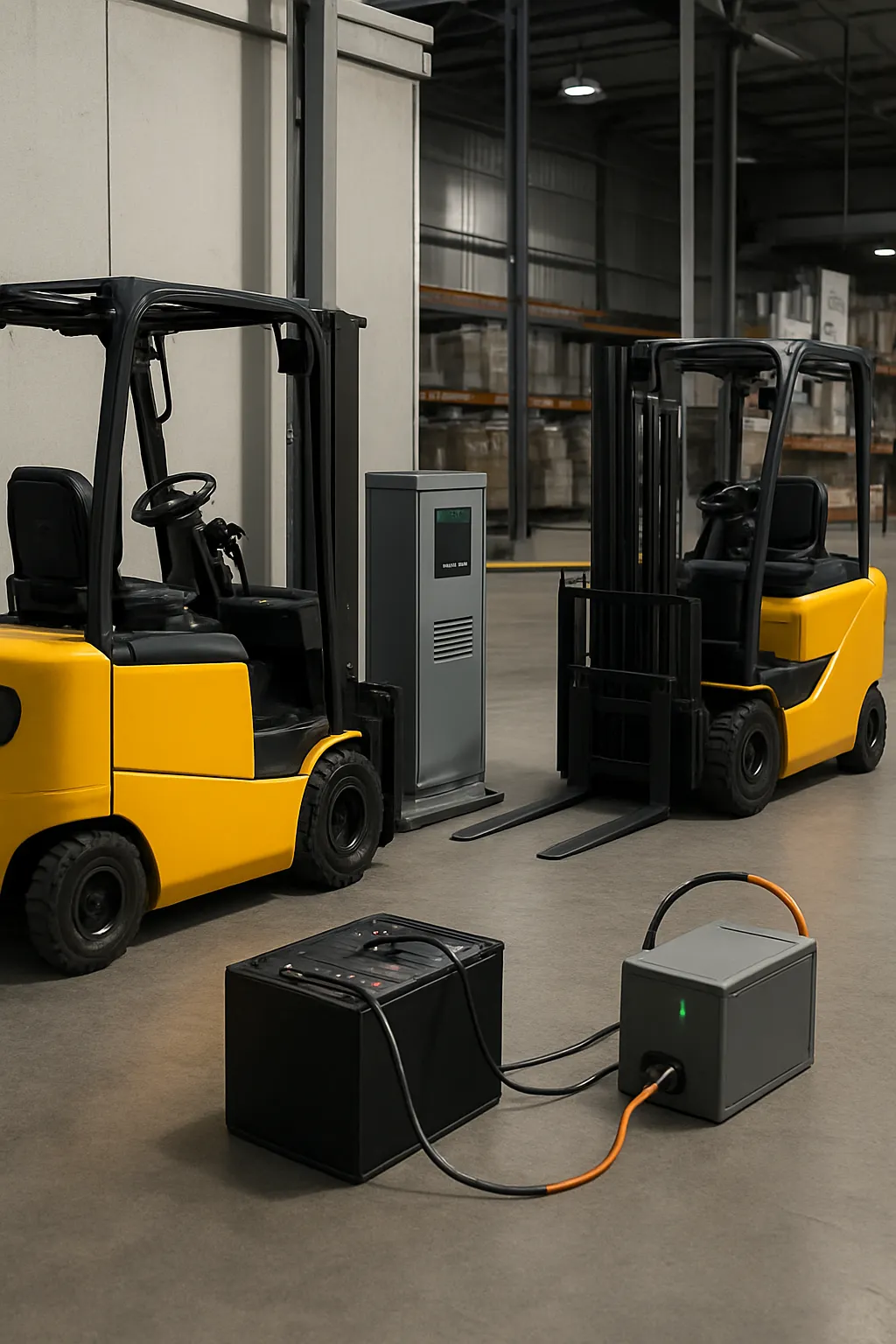
Maintenance is another major difference between the two battery technologies.
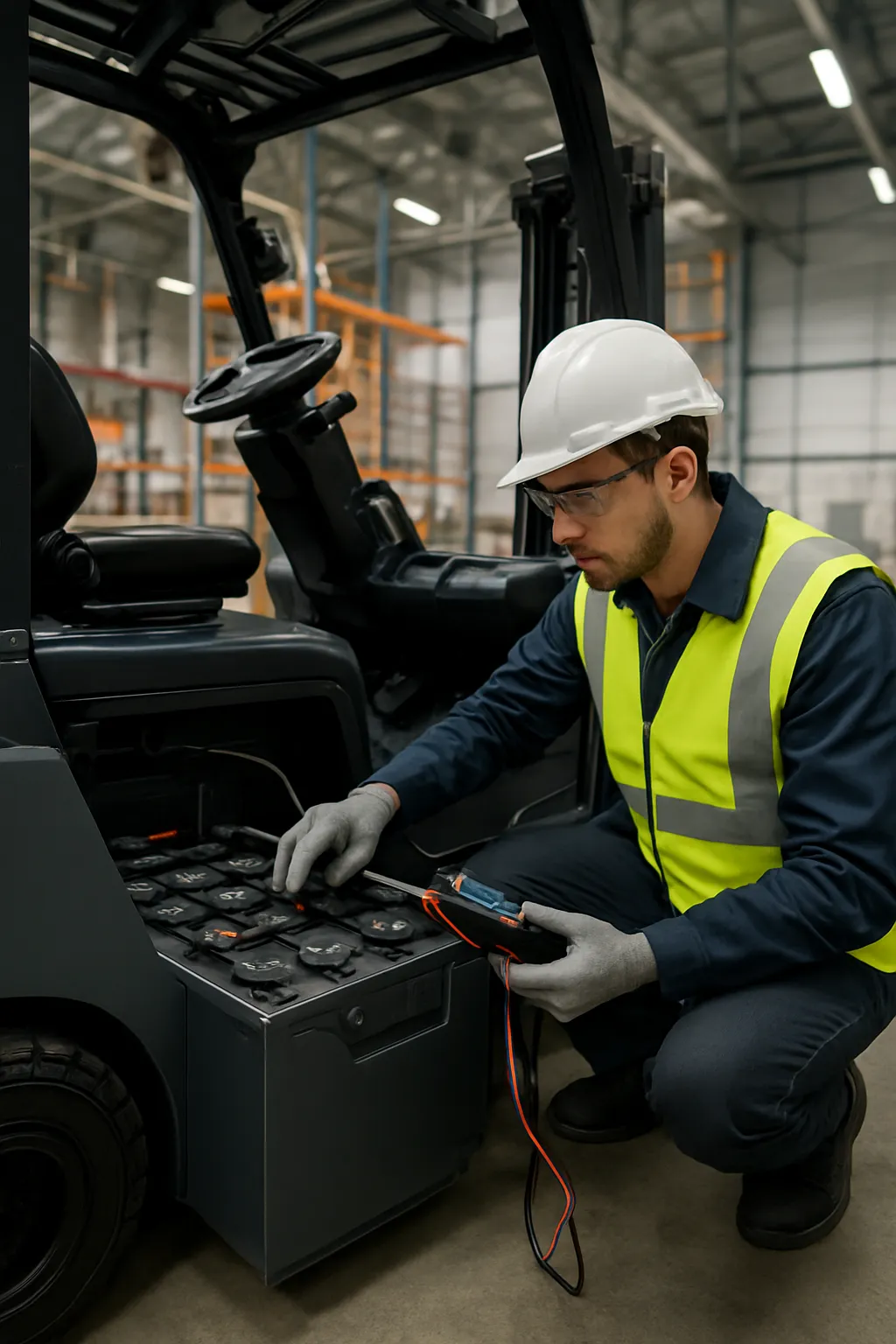
Lead-Acid Maintenance
Routine maintenance includes:
- Watering batteries regularly
- Cleaning battery terminals
- Monitoring electrolyte levels
- Equalization charging
- Inspecting charging equipment
Neglecting these tasks can shorten battery life and reduce equipment performance.
Lithium-Ion Maintenance
Lithium-ion batteries require far less attention.
Businesses eliminate:
- Watering schedules
- Acid spills
- Corrosion cleaning
- Equalization charging
The reduced maintenance saves labour while minimizing unexpected downtime.
Battery Lifespan
The expected service life also influences the overall investment.
Lead-acid batteries generally provide fewer charging cycles before replacement becomes necessary.
Lithium-ion batteries typically deliver:
- Longer operational life
- More charging cycles
- Stable performance throughout their lifespan
- Lower replacement frequency
Although the initial investment is higher, the longer lifespan often improves long-term value.
Operating Costs
Fleet managers should evaluate total ownership costs rather than focusing only on purchase price.
Lead-Acid Battery Costs
Lead-acid batteries may cost less initially but often generate additional expenses through:
- Maintenance labour
- Water consumption
- Battery replacements
- Charging downtime
- Storage requirements
Lithium-Ion Battery Costs
Lithium-ion systems usually reduce these ongoing costs while improving equipment availability.
| Cost consideration | Lead-acid batteries | Lithium-ion batteries |
|---|---|---|
| Initial investment | Lower upfront purchase cost | Higher upfront purchase cost |
| Routine maintenance | Regular watering, cleaning, inspections, and equalization charging | Minimal routine maintenance |
| Charging downtime | Long charging and cooling periods | Rapid and opportunity charging |
| Battery swapping | Often required for continuous operations | Not required in many applications |
| Replacement frequency | Generally more frequent | Generally less frequent |
| Storage requirements | May require spare batteries and dedicated charging areas | Can reduce the need for spare-battery storage |
Why North America Is Moving Toward Lithium-Ion
Warehouse operations across North America continue evolving to meet increasing customer expectations.
Growing industries such as:
E-Commerce
Fast inventory movement and high order volumes require dependable equipment availability.
Third-Party Logistics
Flexible warehouse operations need equipment that can support changing customer demands.
Food Distribution
Busy food warehouses depend on reliable material handling and efficient charging schedules.
Manufacturing
Production facilities need consistent equipment performance to keep materials moving.
Retail Fulfillment
Retail distribution centres often face seasonal demand and rapid inventory turnover.
These industries require equipment capable of maximizing uptime while reducing operating costs.
Many organizations are investing in modern electric fleets because lithium-ion batteries improve productivity without increasing maintenance workloads.
Businesses interested in understanding why electric equipment is leading the shift can explore Reading the shift as warehouses upgrade aging internal combustion fleets throughout Canada and the United States.
Warehouse Considerations
Facilities often experience demanding operating conditions due to:
- Extended operating hours
- High temperatures
- Large distribution centres
- Rapid inventory movement
- Seasonal demand fluctuations
These factors make equipment availability especially important. For warehouses operating two or three shifts, lithium-ion batteries often provide greater operational flexibility because they eliminate battery swapping while reducing charging interruptions.
Smaller operations running single shifts, however, may still find lead-acid batteries to be a practical and cost-effective solution.
Choosing the Right Battery
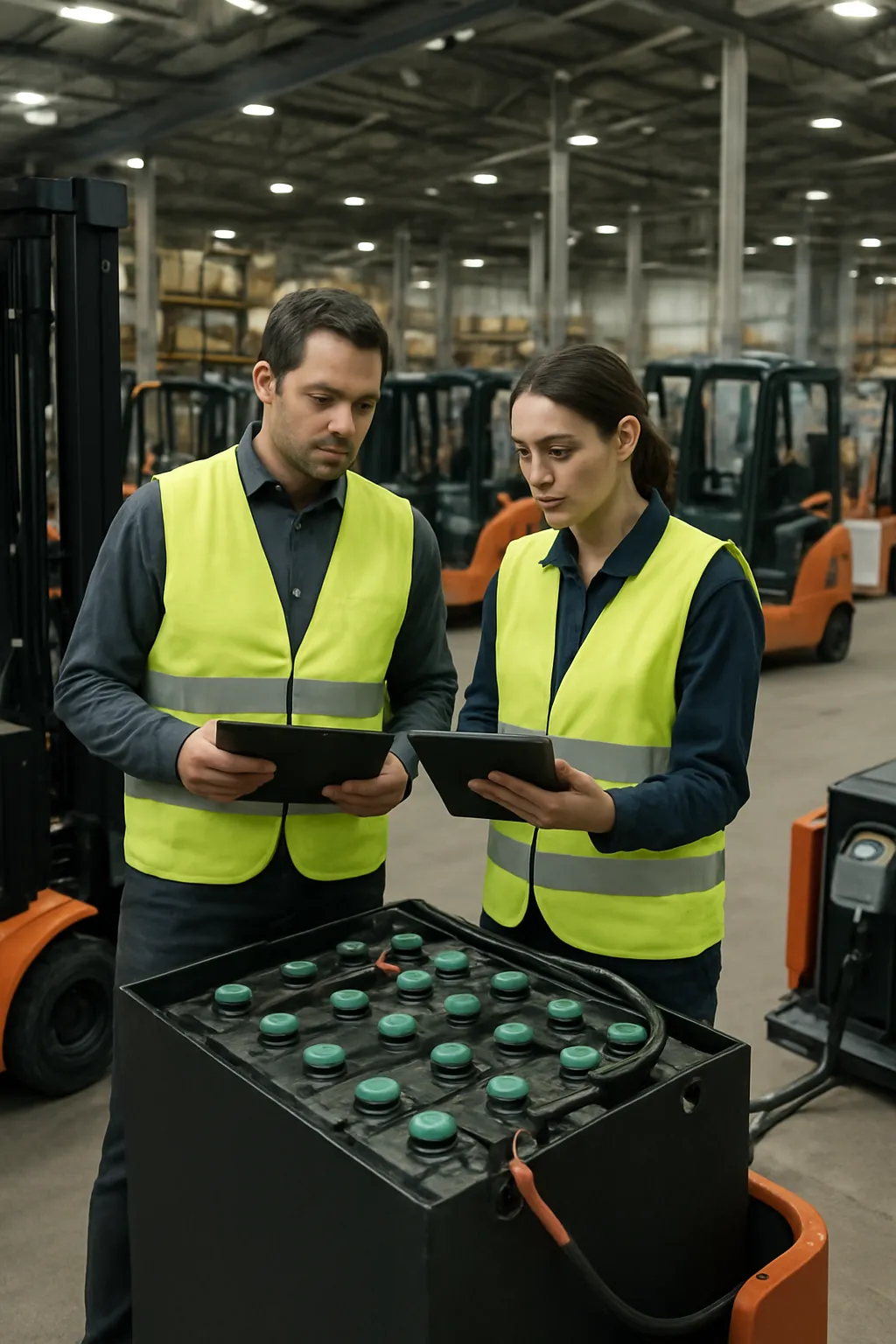
Every warehouse has unique operational requirements.
Lead-acid batteries may be the better choice if your facility:
- Operates a single shift
- Has limited charging demands
- Prioritizes lower upfront investment
- Already has established charging infrastructure
Lithium-ion batteries are often ideal for facilities that:
- Operate multiple shifts
- Need maximum equipment uptime
- Want lower maintenance costs
- Plan long-term fleet expansion
- Focus on sustainability initiatives
Evaluating workflow, charging infrastructure, and future business growth helps ensure the best investment.
Final Thoughts
Selecting between lead-acid and lithium-ion batteries is about more than choosing a power source; it's about building a more efficient and future-ready warehouse operation. As Fork Lift Truck technology continues to evolve, many businesses are investing in electric forklift fleets to benefit from faster charging, lower maintenance, longer battery life, and improved productivity.